Editorial

BBC

08 photographs · February 2017

Photographed for Save the Children during the 2017 drought in Somaliland. The DEC, a group of UK aid charities, used the pictures in its East Africa hunger appeal. The appeal said that over 2.9 million people in Somalia needed emergency food, and that an estimated 363,000 children had malnutrition, 71,000 of them severe cases.

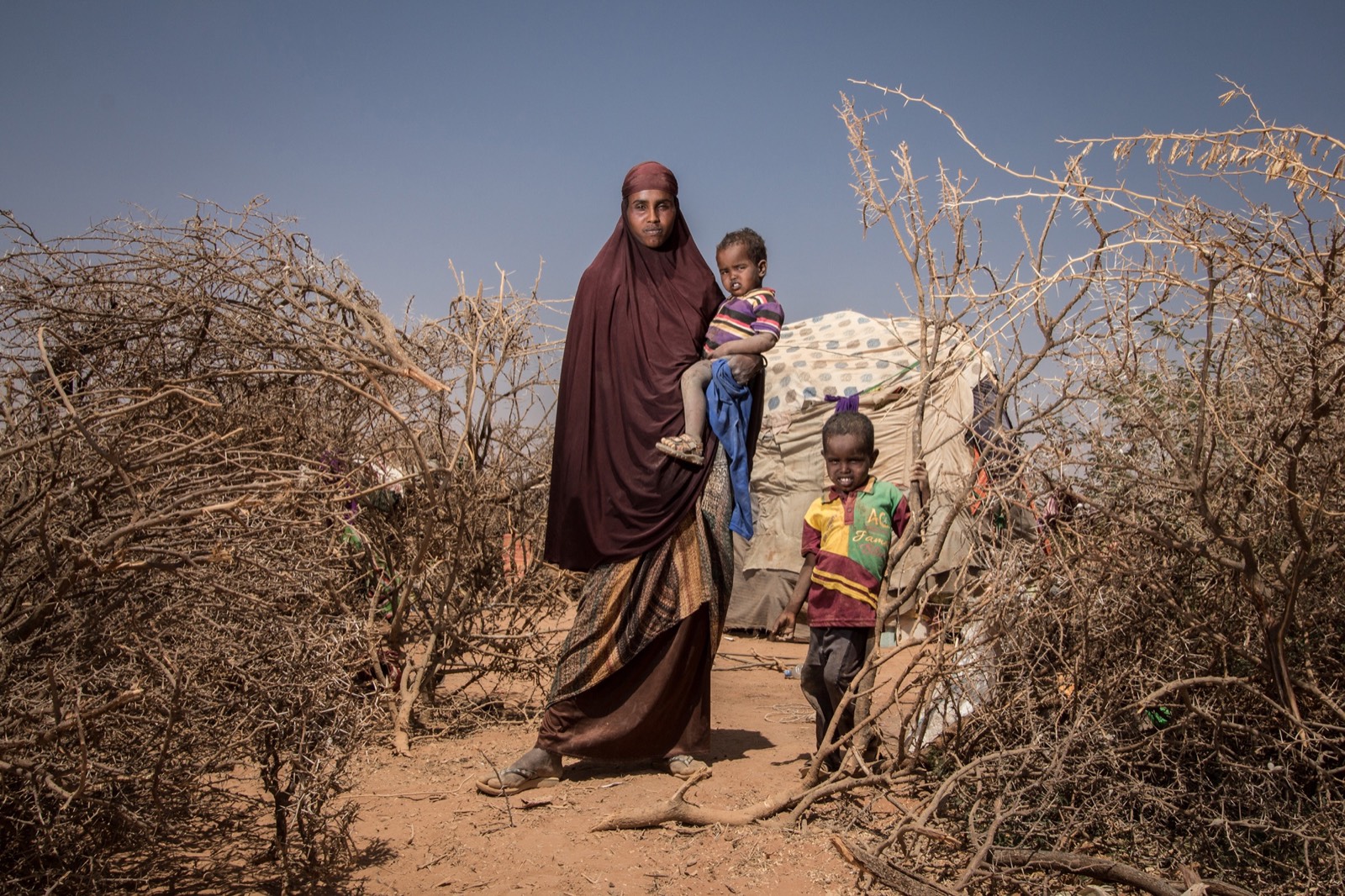
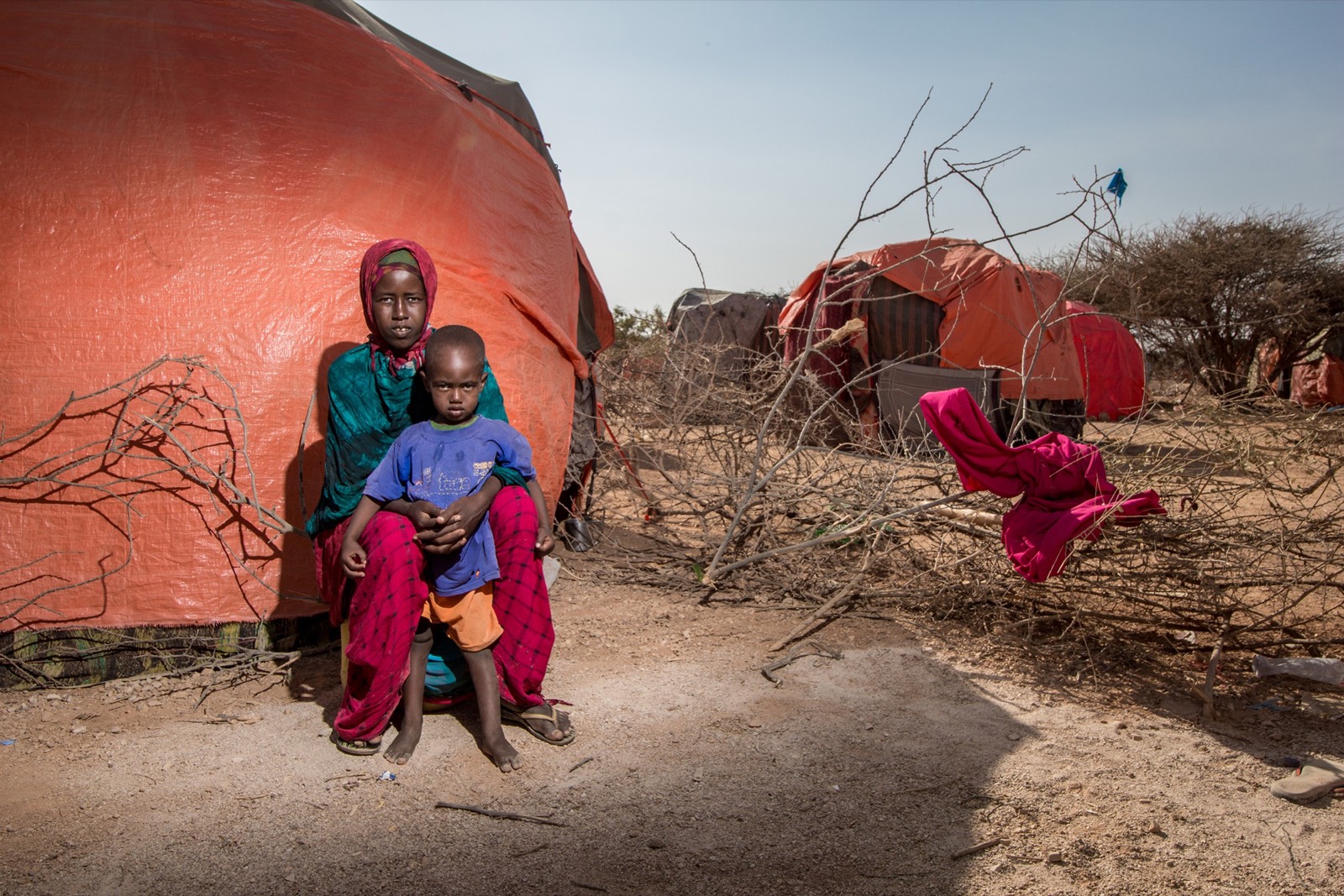
BBC, photo 01. Shukri and two of her three children came to Burao after most of her livestock died.
01Shukri and two of her three children came to Burao after most of her livestock died. They settled near the local airport, hoping her few surviving sheep could find grass. "We came here hoping to feed our livestock," she says. "But the grass was finished and our livestock died. Now we have to stay here. We have nothing left. I hope people from the local community and from abroad can help us."
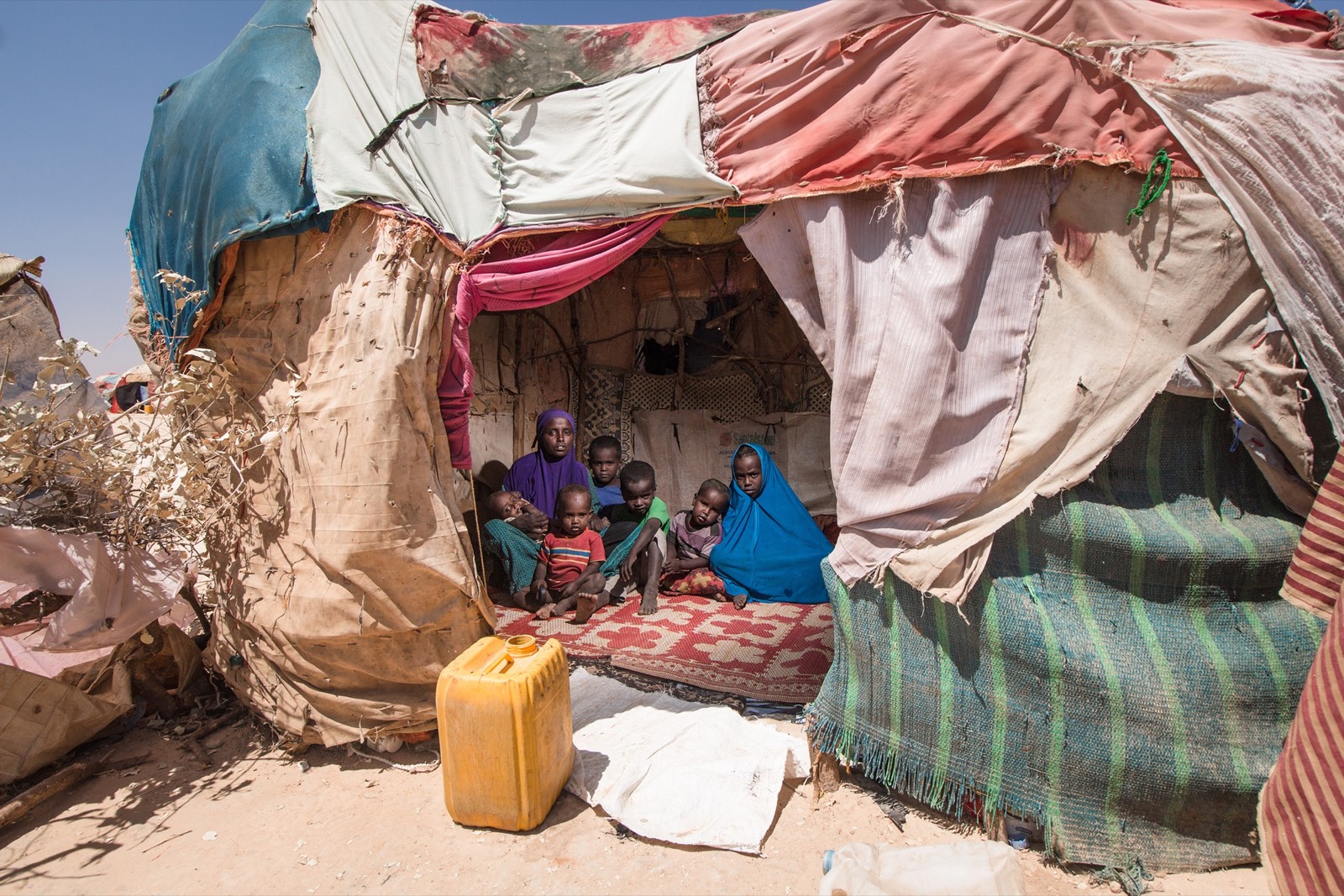
BBC, photo 02. Fardus, a mother of six, came with her children to an informal settlement in Ainabo after they lost all their livestock.
02Fardus, a mother of six, came with her children to an informal settlement in Ainabo after they lost all their livestock. "After our livestock died we were left with nothing to eat. We have no food, no water and no proper shelter. I came here so my children might have something to eat." Many herders like Fardus are leaving the nomadic life for small towns, hoping for food aid from local communities and international organisations.
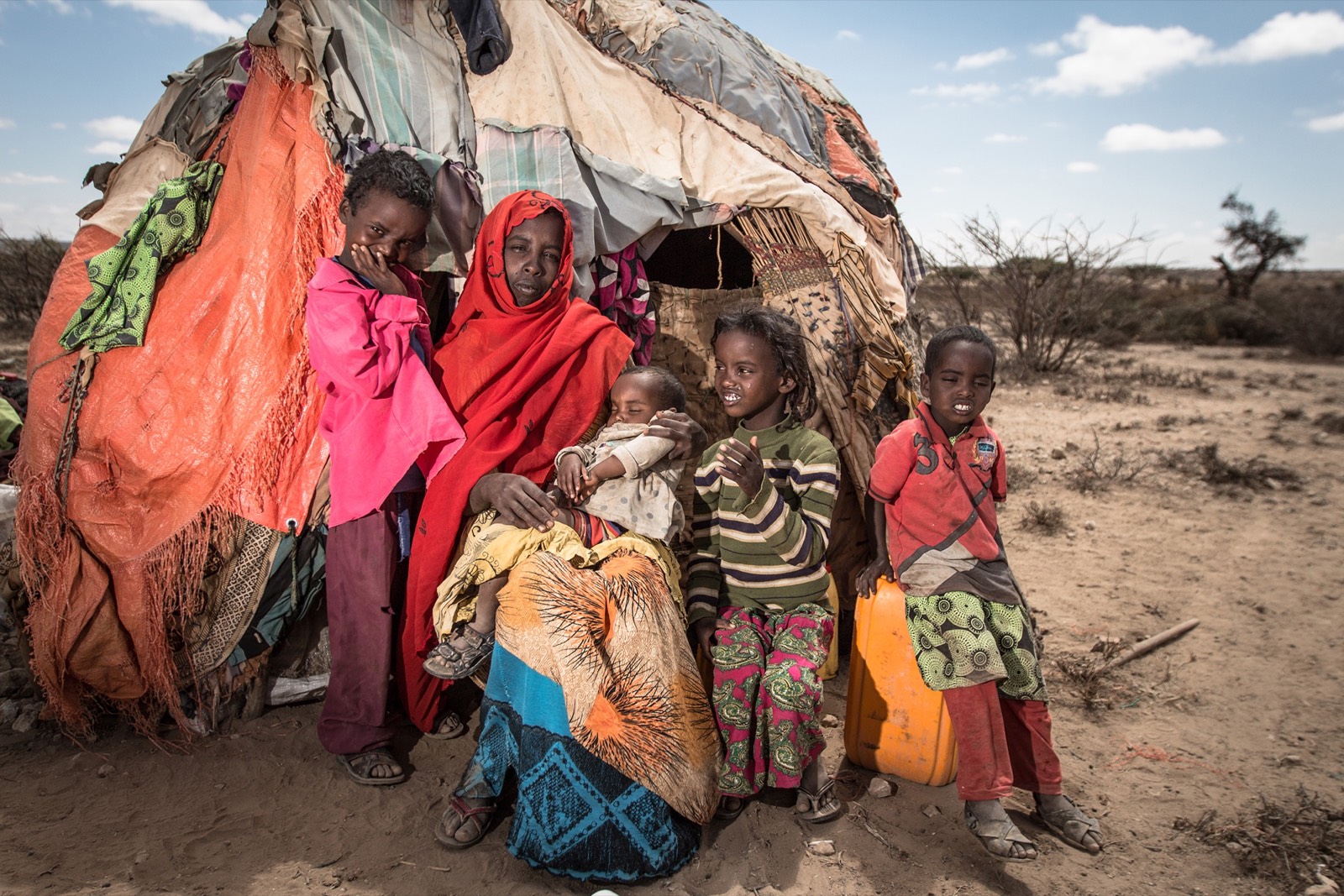
BBC, photo 03. Saado left the drought-hit east of Somaliland after 100 of her animals died.
03Saado left the drought-hit east of Somaliland after 100 of her animals died. She settled with her four children near the town of Dilla, in the west. Another 100 animals died there. She now has 50 sheep and goats, too weak to give milk or to sell. The family eats one meal of rice a day, and a health check found malnutrition in her youngest daughter. "Our biggest need now is food," Saado says. "We need food so my children can get stronger."
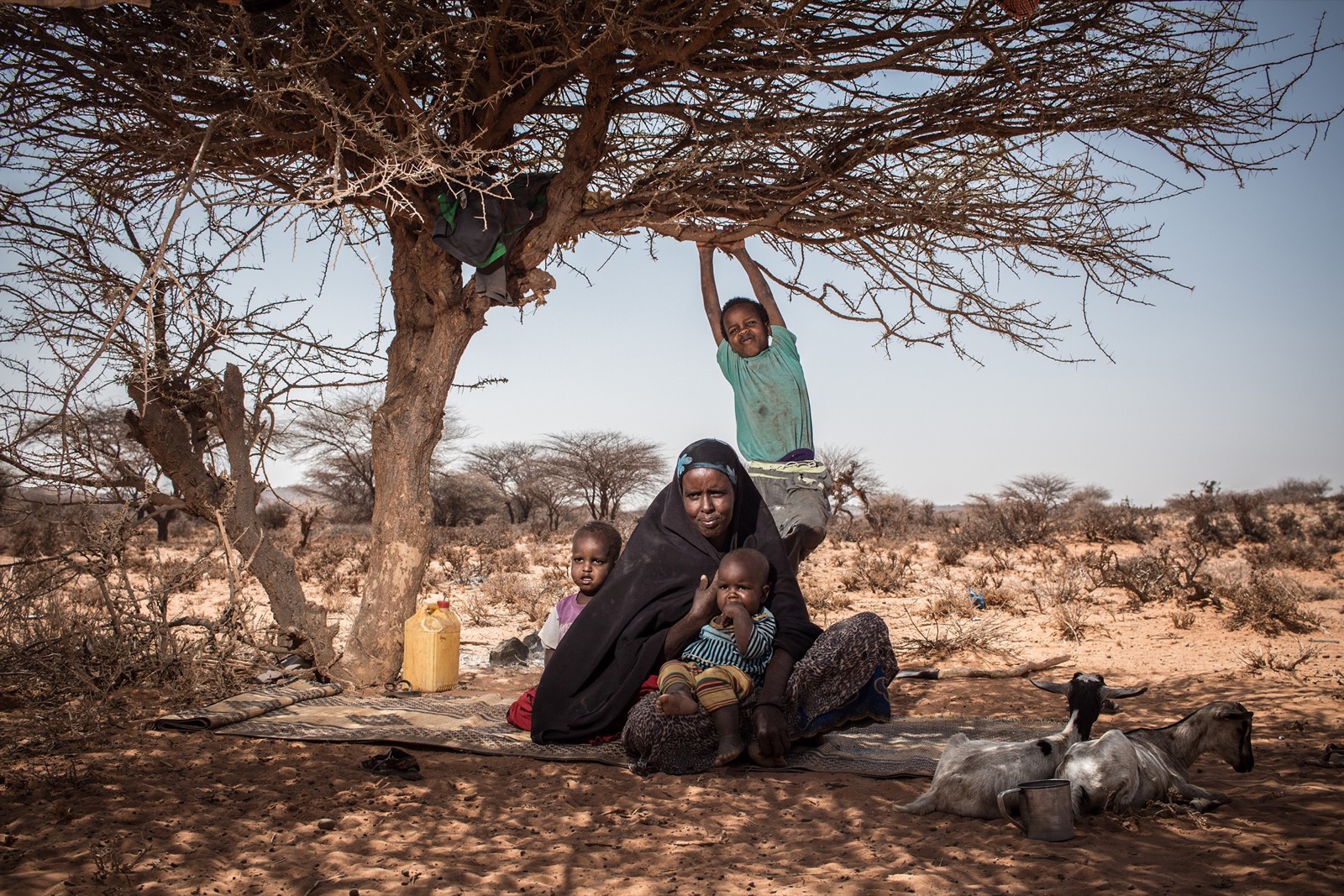
BBC, photo 04. Deeqa and her children rest in the shade of a tree near their home outside Kiridh.
04Deeqa and her children rest in the shade of a tree near their home outside Kiridh. The drought killed 100 of the family's cattle, and the few that survive are too weak to have value. "The drought has put our family in a hard situation," she says. "We have no clean water, and as a mother I do not even have enough food for my children."
BBC, photo 05. Ubah and her two-year-old son moved to an informal settlement outside Yogoori, hoping international organisations would help.
05Ubah and her two-year-old son moved to an informal settlement outside Yogoori, hoping international organisations would help. "We lost all our goats and most of our camels. My husband has taken the surviving camels to market. When we lost our animals, life became very hard, so we came here hoping the aid organisations would register us." Ubah has had a first food distribution but still has no proper shelter and little clean water.
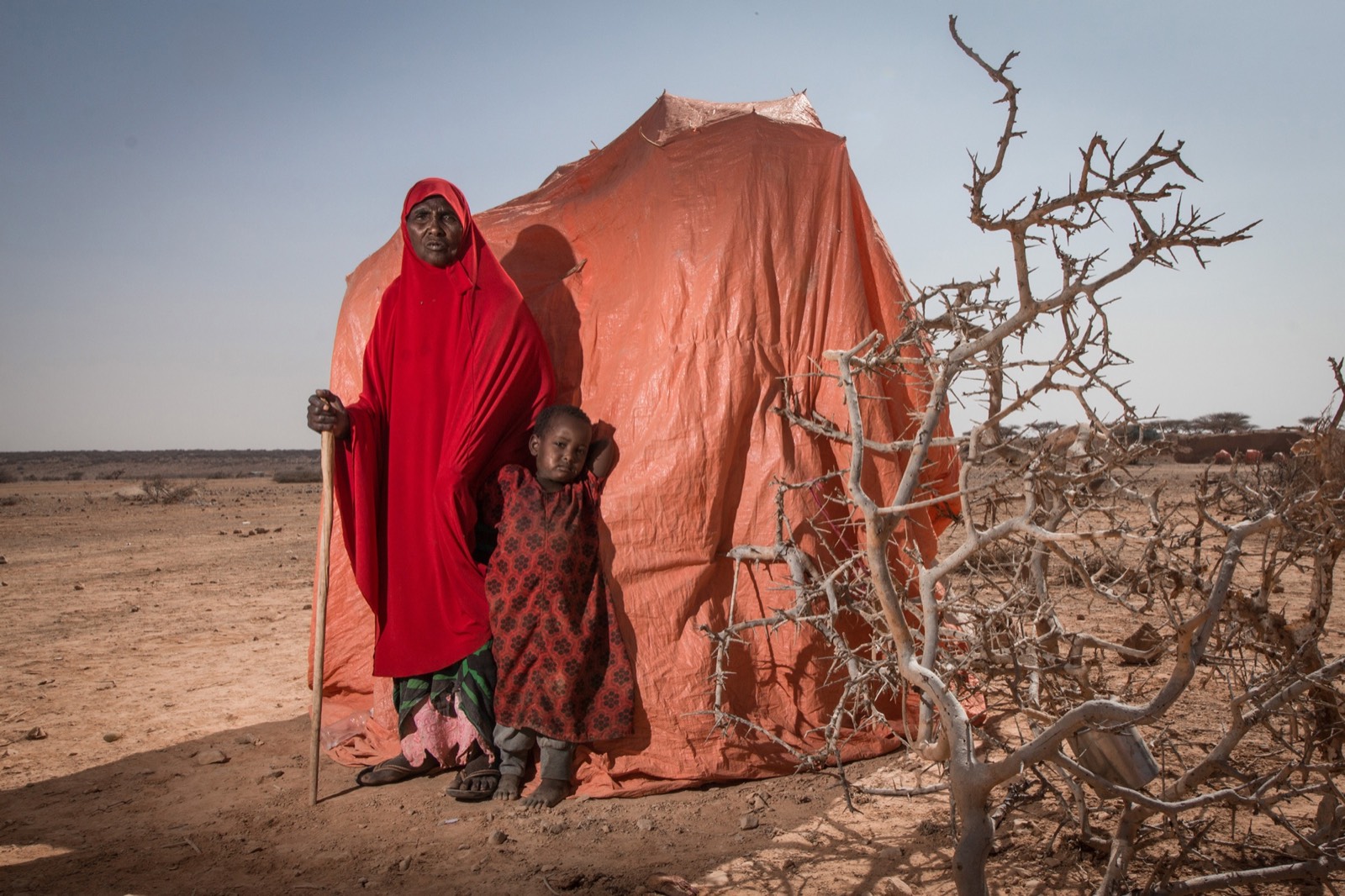
BBC, photo 06. Grandmother Amina stands with her daughter in front of a makeshift shelter in an informal settlement outside Yogoori.
06Grandmother Amina stands with her daughter in front of a makeshift shelter in an informal settlement outside Yogoori. They came to live there after they lost all their livestock to the drought. "Our family had several hundred animals, but only twenty survived the drought," Amina says.
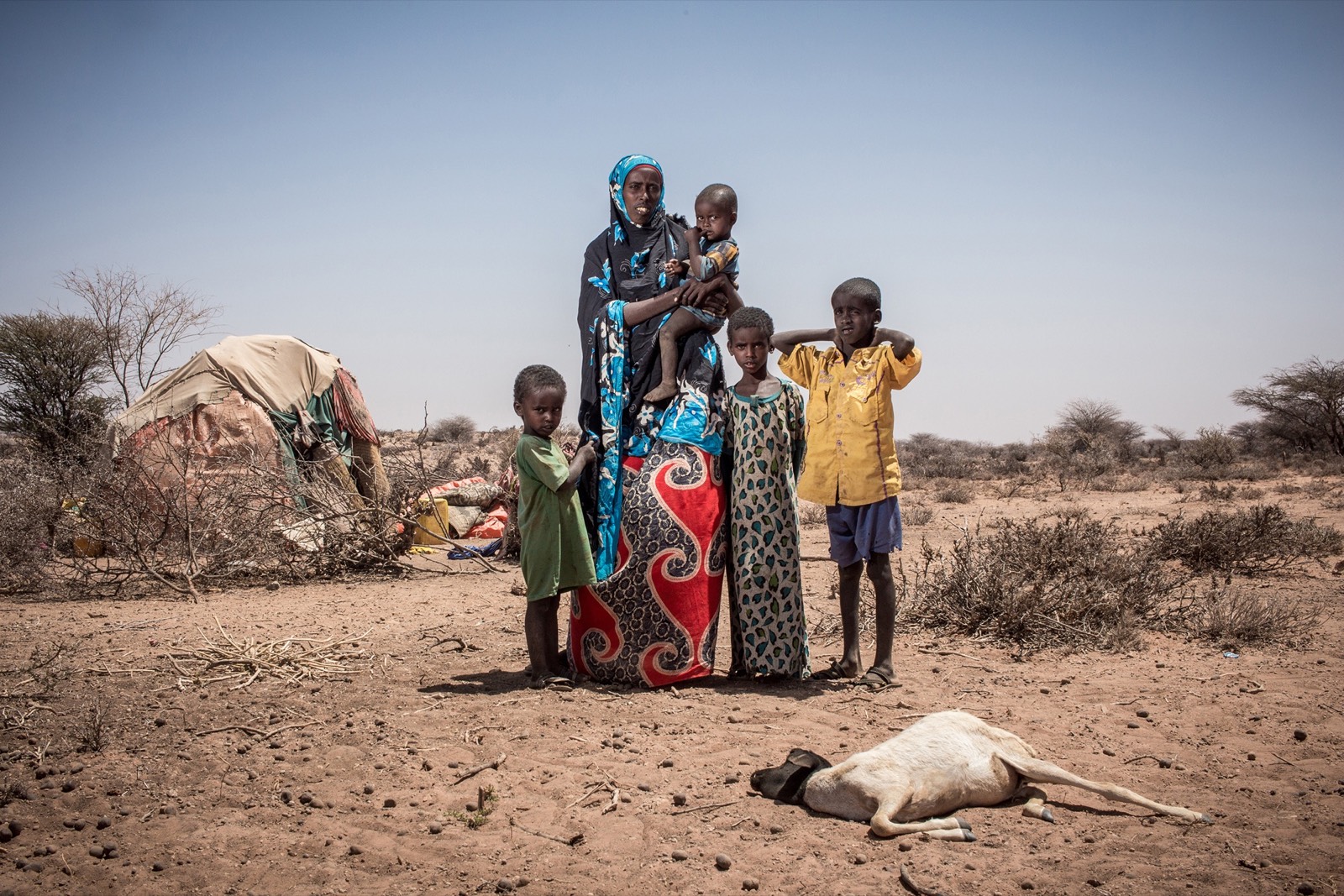
BBC, photo 07. Milgo stands with her four children in front of a sheep that died in the drought.
07Milgo stands with her four children in front of a sheep that died in the drought. The family settled outside Kiridh to be closer to help. As her animals die, the children show signs of malnutrition: weight loss and weak immune systems. "We had over a hundred animals and we have around twenty left, but they are still dying," Milgo says. "Right now we need everything: food, water, supplies for our house. My children are sick. They all have colds and keep coughing. We can feed them only one meal of boiled rice a day. I feel hopeless seeing my children like this."
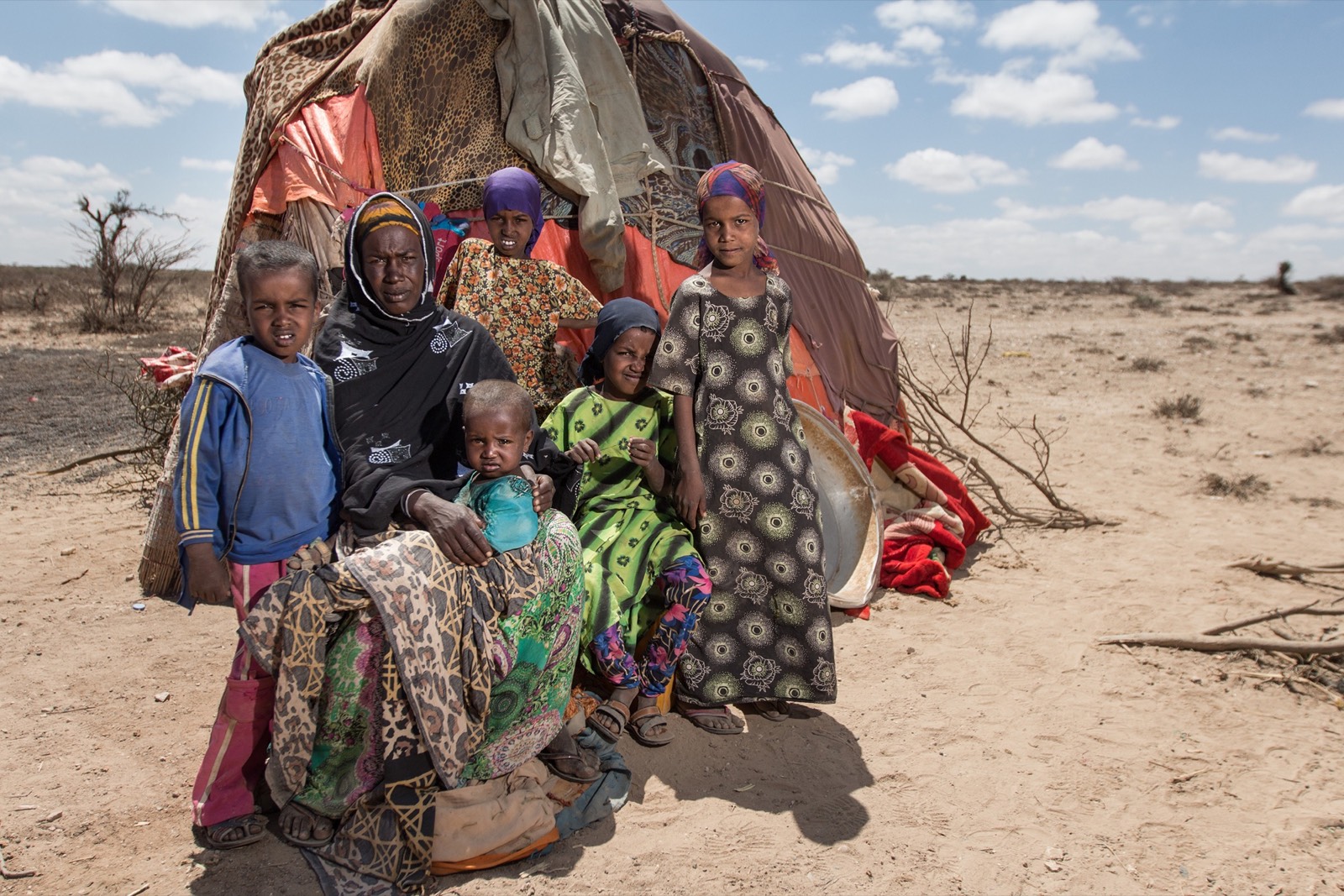
BBC, photo 08. Haali Noor left the drought-hit east of Somaliland with her five children and a few animals.
08Haali Noor left the drought-hit east of Somaliland with her five children and a few animals. She settled near Dilla, in the west, hoping the local community would help. Save the Children's health outreach team found moderate malnutrition in her one-year-old daughter, who sits on her lap. "We used to have 200 animals," Haali says. Lack of water and grass killed 150 of them. "The other 50 are so weak and thin that they have no value. We cannot even sell them. To survive, we buy food on credit from local shops, and we promise to pay when our animals are in better condition."